Why is a Hong Kong Google Invoice account often treated like a “rare asset” in the ad world?
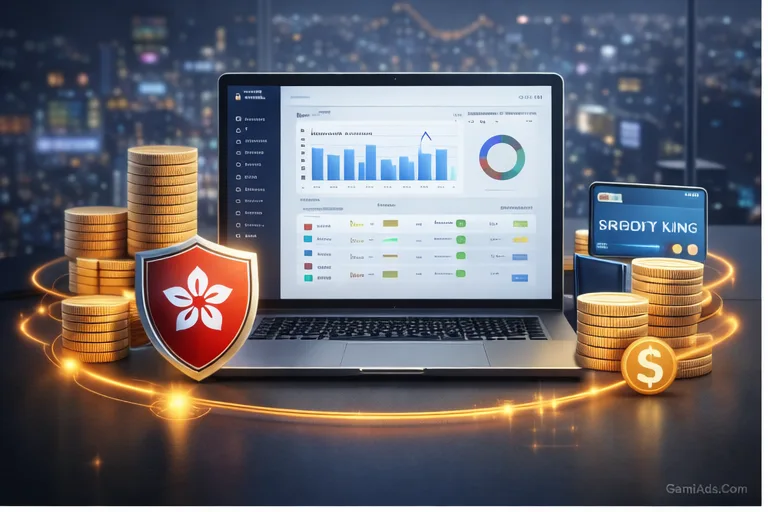
In the advertising world, especially among people who run sensitive or highly competitive niches, Hong Kong Google Invoice accounts are often described as a very powerful type of account. Many see them as a heavy-duty tool for campaigns that standard accounts struggle to support once the budget starts scaling or the risk level rises.
But the more people talk about this type of account, the easier it is for it to be exaggerated. Some treat it like an almost unbeatable solution, while others buy into the hype without understanding what it actually is. If you want to use it properly, you need to see it as a strong tool for the right context, not as a magic shield that solves every advertising problem.
- Hong Kong Google Invoice accounts are frequently mentioned in high-budget and difficult campaign scenarios.
- Their reputation makes them easy to misunderstand or overhype.
- Not every advertiser needs an HK Invoice account from the beginning.
- To use one effectively, you first need to understand what it really is and where its strength comes from.
What is a Hong Kong Google Invoice account in practical terms?
At its core, this is still a Google Ads Invoice account, meaning a postpaid advertising account that runs on a credit limit instead of manual top-ups like a standard account. What makes it attract more attention is the origin and operating structure associated with Hong Kong, which is a major business and advertising hub in Asia.
Put more simply, a Hong Kong Google Invoice account is not a completely different account type by nature. It is better understood as a stronger variation within the postpaid account category. Its strength comes from higher trust, more stable billing, and a setup that usually fits larger spending models or campaigns that require stronger long-term stability.
- It is a postpaid Google Ads Invoice account, not a standard prepaid account.
- Its biggest advantage is that it tends to be better suited for larger budgets and more stable operations.
- Hong Kong refers to the account’s origin, while the core strength still comes from the Invoice model itself.
- You should not confuse the “Hong Kong” label with a guarantee of absolute safety or success.
Why do so many advertisers see HK Invoice as the “king” of VPCS campaigns?
The first reason is trust level. In real-world operations, Invoice accounts usually feel far safer than standard accounts, especially when you are dealing with difficult niches or scaling spend quickly. In sensitive campaigns, that difference can determine whether a campaign survives for the long run or fails within the first few days.
The second reason is scaling stability. Once the budget starts rising fast, standard accounts often reveal weaknesses in billing, limits, or risk scoring. HK Invoice accounts are generally valued more highly because they fit larger spending patterns, faster scaling, and more structured operations.
Another major advantage is lower payment-related risk. When you no longer need to keep topping up or changing cards like with a standard account, you reduce an entire category of abnormal signals that platforms tend to treat very sensitively. That combination of trust, billing stability, and spending tolerance is what makes many advertisers prefer HK Invoice for heavier VPCS cases.
- Higher trust is the first reason HK Invoice stands out in difficult advertising cases.
- Its ability to handle larger campaigns and stronger scaling is usually better than that of standard accounts.
- More stable billing helps remove one of the most sensitive groups of operational risks.
- The strength of HK Invoice comes from multiple advantages working together, not from a single factor.

Who should seriously consider using a Hong Kong Google Invoice account?
This is not the right account type for everyone. If you are still testing the market, working with a small budget, or trying to find a winning offer, an HK Invoice account may be more power than you actually need. At that stage, your real bottleneck may still be the product, the content, or the campaign structure rather than the account foundation itself.
On the other hand, if you are already running sensitive niches, need high spending capacity, keep hitting scaling ceilings with standard accounts, or manage difficult clients as an agency, then HK Invoice becomes a very worthwhile option to consider. It makes more sense when your challenge is no longer early testing, but stable growth and larger-scale operations.
- You do not need HK Invoice if you are still in the early testing phase without a proven winning model.
- It becomes much more relevant if you run sensitive niches or keep hitting account ceilings.
- It is a strong fit for businesses or agencies that need larger budgets and faster scaling rhythm.
- The right account type should match your current growth stage, not just its reputation in the market.
What is the biggest risk when trying to buy a Hong Kong Google Invoice account?
Because these accounts are associated with the image of being “powerful,” HK Invoice has also become one of the account categories most likely to be faked, oversold, or distributed through unclear channels. Many people end up buying accounts with vague origins, accounts with problematic history, or worse, paying for something that comes with little or no real support after the sale.
The risk is not only about losing money at the moment of purchase. It also affects later operations. An account that looks strong on the surface but has unclear history or unclear control rights can leave you exposed at exactly the moment when the campaign needs to scale. That is why account origin, support policy, and the transparency of the provider matter almost as much as the account type itself.
- HK Invoice accounts are easy to overprice or sell vaguely because their reputation is so strong.
- Unclear origin can mean you are buying an account with problematic history.
- Without warranty or post-sale support, operational risk increases dramatically.
- Choosing the right provider is almost as important as choosing the right account type.

Conclusion: HK Invoice is genuinely strong, but only when you understand it and use it correctly
A Hong Kong Google Invoice account can absolutely be a valuable resource in many difficult advertising situations, especially when you need higher trust, more stable billing, and stronger spending capacity. But it is not a replacement for a weak campaign, an unproven product, or a poorly disciplined operating system.
In other words, HK Invoice is a tool that helps you move faster and farther once the campaign foundation is already strong enough. If you understand that role clearly, you will know when it is worth investing in to break your growth ceiling. But if you treat it like a magic charm against account failure, you are far more likely to be disappointed or choose the wrong account type for your current stage.
- HK Invoice is a powerful tool, but it is not a miracle fix for every advertising problem.
- It works best when the campaign already has a strong base and is hitting a scaling ceiling.
- Understanding the real role of the account helps you invest more accurately.
- If you want long-term results, combine a strong account with a transparent provider and the right operating discipline.
Frequently Asked Questions
Is a Hong Kong Google Invoice account completely different from a regular Google Invoice account?
Not completely. It is still a postpaid Google Ads Invoice account by nature, but it is often valued more highly because of its trust level, origin, and its fit for campaigns that need stronger long-term stability.
Why is HK Invoice often considered strong for VPCS campaigns?
Because this type of account usually offers better trust, more stable billing, and stronger tolerance for rapid scaling than standard accounts. In sensitive niches, those three factors can make a major difference in real operations.
Does using HK Invoice automatically mean a VPCS campaign will always survive?
No. HK Invoice can remove some major bottlenecks around trust and payment, but it cannot turn a weak campaign into a strong one. Content, landing page quality, campaign setup, and operating discipline still matter enormously.
Who should not buy a Hong Kong Google Invoice account right now?
Advertisers who are still testing small, do not yet have a winning offer, have a low budget, or do not need serious scaling yet usually do not need HK Invoice at this stage. In those cases, the real priority may still be the campaign strategy rather than the account type.
What matters most when buying an HK Invoice account?
The most important factor is the account’s origin and the credibility of the provider. Even a strong-looking account can become a serious risk if control rights, account history, or support policy are unclear once real spending begins.